How Much Probiotic Should You Give a Dog?
The honest answer is that there is no universal dose. How much probiotic a dog needs depends on the specific product, its formulation and potency, the format (powder, chew or capsule), your dog's size and life stage, and above all the manufacturer's directions. This guide explains what actually sets the dose, how to give a probiotic properly, how often, and when a question is really one for your veterinarian.
Published 26 August 2026 · Last reviewed August 2026 · Written by the PawBiotix Official editorial team · General educational information, not veterinary advice
The short answer
Give the serving printed on your chosen product's label for your dog's size, and give it consistently. There is no single number of grams, scoops or CFU that applies to every dog, because products differ enormously in strains and potency. More is not better — overshooting the serving usually just causes gas or loose stools. Follow the label, keep the routine steady, and ask your veterinarian if your dog is very young, unwell, or on medication.
What determines a dog's probiotic dosage?
The dose is set by the product, not by a formula you can apply across brands. Because probiotic effects are strain-specific, the number that matters is whatever the manufacturer validated for that particular formulation — and that varies from one product to the next. The main factors are:
- Formulation and strains. Different organisms are active at different amounts, so a serving of one product is not equivalent to a serving of another.
- Potency (CFU). Products declare different counts of live organisms per serving. A higher number is not automatically better; what counts is a serving the maker has stood behind, ideally guaranteed through the expiry date rather than only at manufacture.
- Format. Powders, soft chews and capsules deliver their serving differently. A powder is measured by scoop or sachet; a chew or capsule is a fixed unit.
- Dog size and life stage. Many products scale the serving to body weight, and some give separate guidance for puppies or seniors.
- Reason for use. Everyday digestive support and short-term support during a specific upset are not always handled the same way — another reason to read the directions and, where relevant, ask your vet.
Because of all this, the single most reliable instruction anyone can give is: use the serving on the label of the product you have chosen. Our guide to choosing a dog probiotic explains the quality signals worth checking before you buy.

How should you give probiotics to a dog?
Follow the product's directions, and make the routine easy to repeat. The mechanics are simple, and getting them consistent matters more than any clever trick:
- Read the label first. Use the serving it specifies for your dog's weight or life stage; don't scale it up on a hunch.
- Mix a powder into food when the product allows it. Many unflavoured powders are designed to be sprinkled onto a normal meal, which also helps palatability.
- Give a chew or capsule as directed — with or after food unless the label says otherwise.
- Keep it consistent. Same serving, ideally around the same time each day. Probiotic organisms are transient, so a steady daily routine is how most products are meant to work.
- Store it as instructed. Heat, humidity and an unsealed container all reduce viable organism counts, so reseal after each use and keep it cool and dry.
- Introduce it gradually for sensitive dogs — a partial serving for the first few days, building to the full amount, can smooth the transition.
Should dogs take probiotics with food?
Usually yes, but it depends on the product. Many canine powders and chews are intended to be given with a meal — food can improve acceptance and give a consistent daily anchor — while some products specify a particular timing. Rather than apply a universal rule, follow what the label says for the product you are using. If a product gives no instruction and your dog tolerates it well with dinner, that is a sensible default, but it is not a claim that with-food is always superior.
How often should you give a dog probiotics?
For products designed as daily digestive support, once a day, every day, is the usual pattern — but confirm it on the label, because not every probiotic is built for the same schedule. Consistency is the point: a probiotic works while it is being given, and its benefits are not usually "banked" after you stop. If a product is intended for short-term use in a specific situation, its directions will say so. When you are unsure whether daily long-term use suits your individual dog, that is a good question for your veterinarian.
Dog probiotic dosage by life stage
Life stage changes the context more than it changes a magic number. The serving still comes from the product label; what shifts is how much caution surrounds it.
How much probiotic should a puppy get?
Use a product suitable for a puppy's age and size and follow its directions — a puppy is not simply a small adult. Probiotics are commonly discussed around weaning and diet changes, when digestive upsets are frequent. The important caveat is urgency, not the serving: puppies dehydrate quickly, and diarrhea in a puppy can have causes such as parvovirus or parasites that need prompt veterinary attention. A supplement is never the response to a sick puppy.
How much probiotic should an adult dog get?
Give the label serving for your adult dog's weight, consistently. Most everyday-support products are weight-scaled and designed for daily use, and a healthy adult usually tolerates them well after any brief adjustment period. If you are adding a probiotic at the same time as a food change, change one thing at a time so you can tell what is doing what.
How much probiotic should a senior dog get?
The serving is still the label serving, but the surrounding caution is different. In an older dog, new digestive signs are more likely to reflect an underlying condition, and seniors are more often on medication. So the priority is a veterinary check first, then the supplement second, rather than reaching for a larger serving to chase a result.
Can you give a dog too many probiotics?
For a healthy dog, a single oversized serving is unlikely to cause serious harm, but it commonly backfires as gas, loose stools or an unsettled stomach — which is the clearest sign that more is not better. The organisms are only part of the picture, too: added fats, flavourings or sweeteners in a product can matter as much as the probiotic itself, which is one reason human supplements are a poor substitute. If your dog gets into a large quantity, or you see worsening diarrhea, vomiting or lethargy after any serving, stop and call your veterinarian. Our safety guide covers the dogs that should be assessed before starting a probiotic at all.
How long do probiotics take to work?
It varies by dog and by purpose, so avoid fixed promises. In studies of short-term diarrhea, effects have sometimes been reported within a few days; for everyday digestive balance, owners and veterinarians typically judge over roughly one to a few weeks of consistent daily use. What matters is what you monitor: stool quality, appetite, gas and comfort. If nothing has changed after several weeks of steady use, the answer is to discuss it with your vet or reconsider the product — not to keep increasing the serving.
What about probiotics for dog diarrhea?
Diarrhea is the situation where dosage questions come up most, and it deserves its own careful answer. Probiotics may help some dogs recover a little faster from mild, short-term diarrhea — particularly upsets linked to stress, diet change or a course of antibiotics — but they are supportive care, not a treatment for the underlying cause, and the serving still comes from the product label. They will not resolve diarrhea driven by infection, parasites, obstruction or organ disease. For the full picture, including how quickly to expect a difference and the situations that need a vet rather than a supplement, see our dedicated guide on whether probiotics help dogs with diarrhea.
When should you ask a vet?
Dosage is a label question; a genuinely unwell dog is a veterinary one. Contact your veterinarian — and treat it as urgent where the signs are severe — in situations such as these.
Ask a veterinarian, rather than adjusting a supplement, if you see
- Diarrhea that persists beyond about 48 hours, or keeps coming back
- Blood in the stool or vomit, or black, tarry stools
- Repeated vomiting, or an inability to keep water down
- Marked lethargy, weakness, collapse or pale gums
- Signs of dehydration, especially in a very young puppy or a small dog
- Any concerning sign in a dog with a significant underlying condition, or on medication
- Symptoms that worsen rather than improve after starting a probiotic
None of these is a reason to change the dose of a supplement. A phone call to your practice is always the right first step when you're unsure.
Where PawBiotix fits
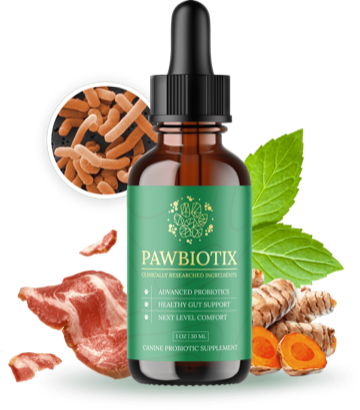
PawBiotix is one example of the kind of product these principles point toward, and it is worth using it to illustrate what to look for rather than as a pitch. According to its official product information, it is an unflavoured powder you sprinkle onto your dog's food as a single daily serving, it pairs probiotics with prebiotic fibre among 13 gut-supporting ingredients, and it is made for dogs of every breed, age and size. Its makers state that the ingredients are tested for purity and screened for contaminants, and it is sold through its official website with a 60-day money-back guarantee.
Read that the way you would read any product: the useful signals are a dog-specific formulation, a clear once-daily serving you follow rather than improvise, an easy format, and transparent purchase and return terms. Full strain designations and CFU potency are not published in the official product information, so we don't quote dose figures for them — check the current product label and, if your dog has any health condition, your veterinarian. Nothing in the general research described above is a clinical claim about this or any specific product. If you want to compare it against other options first, our guide to choosing a dog probiotic lays out the criteria, and you can review the current details on the PawBiotix page.

Frequently asked questions
How much probiotic should I give my dog?
There is no single dose that fits every dog, because probiotic products differ in their strains, potency and format. The right amount is the serving printed on your chosen product's label for your dog's size, given consistently. If you are unsure, or your dog has a health condition, ask your veterinarian rather than guessing.
Can dogs take probiotics every day?
Many dog probiotics are formulated for daily use, and consistency tends to matter more than dose size for everyday digestive support. Follow the product's directions, since not every probiotic is designed for the same schedule. If you are giving one long term, or your dog is on medication, it is worth confirming with your veterinarian.
Should I give my dog probiotics with food?
Often yes, and many powders are designed to be mixed into a meal, but it depends on the product. Some are meant to be given with food to improve palatability and consistency, while others specify otherwise. The reliable rule is to follow the label, and to keep the routine the same each day.
Can puppies take probiotics?
Probiotics are sometimes used in puppies, including around weaning and diet changes, but a puppy is not simply a small adult. Use a product suitable for a puppy's age and size, follow its directions, and treat any diarrhea in a puppy as a reason to call your vet, since puppies dehydrate quickly and can have serious causes.
Can you give a dog too many probiotics?
Giving more than the recommended serving usually is not dangerous for a healthy dog, but it more often causes gas or looser stools than a better result, so more is not better. Use the serving on the label. If your dog develops worsening diarrhea, vomiting or lethargy, stop and contact your veterinarian.
How long do dog probiotics take to work?
It depends on the dog and the reason. In studies of acute diarrhea, effects have been reported within days, while everyday digestive support is usually judged over a few weeks of consistent use. Monitor stool quality, appetite and comfort, and if nothing changes after several weeks, discuss it with your vet rather than increasing the dose.
Can probiotics help dogs with diarrhea?
They may help some dogs with short-term diarrhea, especially milder cases or diarrhea linked to stress, diet change or antibiotics, but they are supportive care, not a treatment for the underlying cause. They will not fix diarrhea from infection, parasites or obstruction, and a dog that is also vomiting, lethargic or passing blood needs a vet.
When should I ask a veterinarian about giving my dog probiotics?
Ask a veterinarian if diarrhea is persistent or bloody, if there is repeated vomiting, marked lethargy or signs of dehydration, if your dog is a very young puppy or has a significant health condition, or if symptoms worsen rather than improve. A probiotic is never a substitute for veterinary care when a dog is genuinely unwell.
Keep reading
- What are probiotics for dogs? — how they work, and why effects are strain-specific.
- How to choose a dog probiotic — the quality signals to check before you buy.
- Probiotics for dog diarrhea — when they may help, how fast, and when to see a vet.
- Are probiotics safe for dogs? — side effects, life stages, and who should check with a vet first.
- Dog gut health: a complete guide — the fundamentals behind everyday digestive support.
References
- Systematic review: "Clinical effect of probiotics in prevention or treatment of gastrointestinal disease in dogs." PubMed Central. ncbi.nlm.nih.gov
- "Application of Probiotics in Cats and Dogs: Benefits and Mechanisms." Veterinary Sciences, MDPI (2025). mdpi.com
- American Kennel Club (AKC). "How Probiotics Work in Every Stage of a Dog's Life." akc.org
- PetMD (vet-verified). "Probiotics for Dogs." petmd.com
- World Small Animal Veterinary Association — Global Nutrition Guidelines. wsava.org
- National Animal Supplement Council — quality, labelling and compliance programme. nasc.cc
- U.S. Food and Drug Administration, Center for Veterinary Medicine — animal food and supplement oversight. fda.gov
Editorial note: This guide is general canine-health education, checked against the sources above. It has not been reviewed by an individual veterinarian and is not a substitute for professional veterinary advice, diagnosis or treatment. Always follow your product's label, and if your dog is unwell, contact your veterinary practice rather than relying on this or any other web page. See our editorial policy.
Affiliate disclosure: This website contains affiliate links. If you purchase through them we may earn a commission at no additional cost to you. See our disclaimer.